The Chosen River
Ninety miles of wild water, no roads, no crowds — and fish that have never seen a fly before yours.
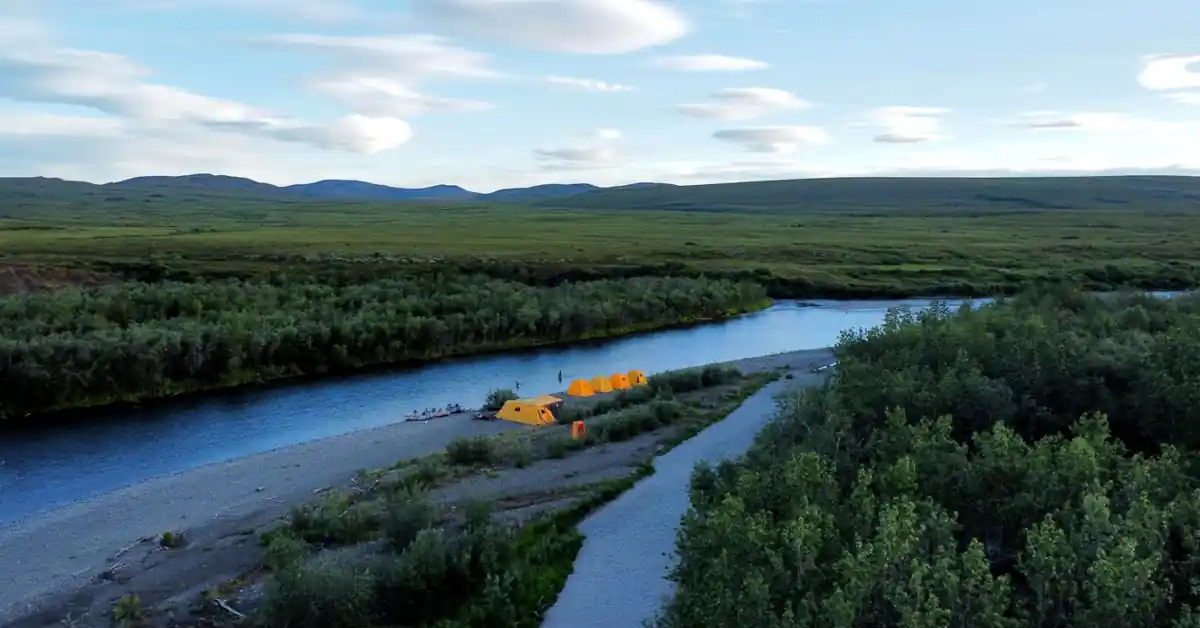
The Kanektok rises in the Ahklun Mountains at Kagati and Pegati Lakes and flows 95 miles to the Bering Sea near Quinhagak. The entire river runs through the 4.7-million-acre Togiak National Wildlife Refuge. There is no road access. We fly in from Bethel by floatplane, put in at the lakes, and float the full river out to takeout. That isolation is not an inconvenience — it is the whole point.
For current Alaska Rainbow Adventures trip details, scheduled departures, rates, and booking information, see our Kanektok River Float Fishing Trips page.
The river fishes as well as it does because of scale and diversity. The watershed is large enough to support all five Pacific salmon species in significant numbers, which in turn feeds a resident rainbow trout population of exceptional size and aggression. The fish here are not pressured. They are not educated. They have not seen a parade of rafts. On a float trip, every bend is water that has been resting since the last group came through.
Fishing the Kanektok
The Kanektok earns "fish factory" status because of what's available, how many there are, and how aggressively they eat.
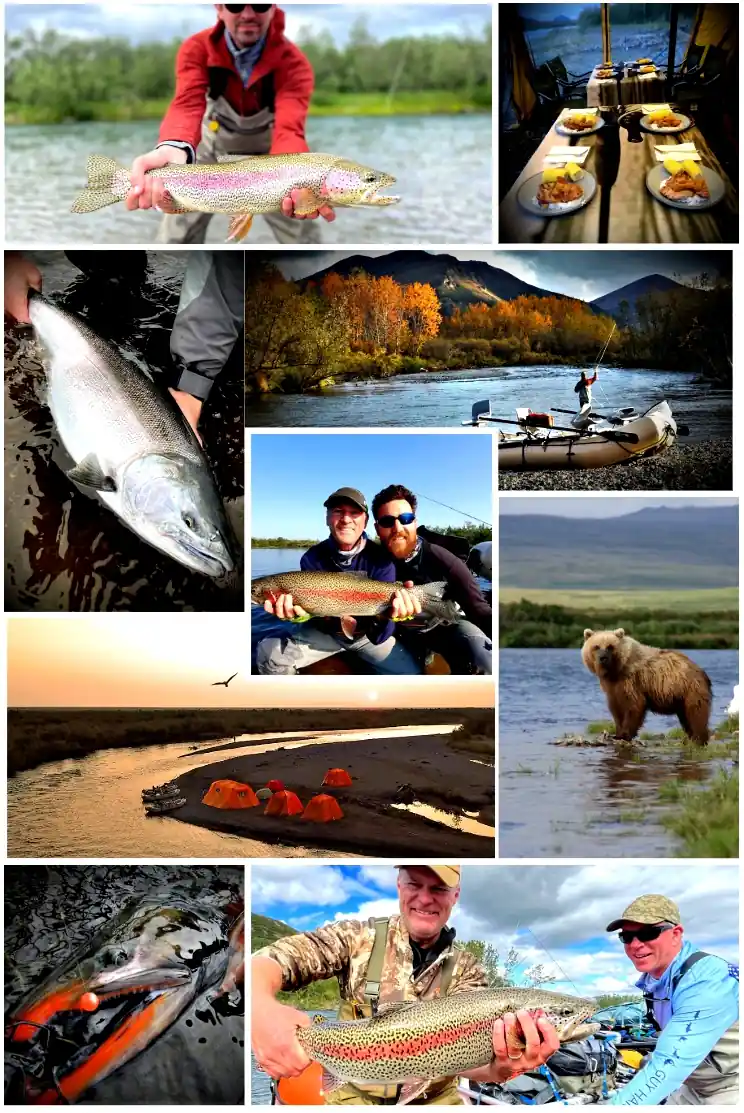
The primary target is the Leopard Rainbow — large, heavily spotted fish with the aggression that comes from living in a salmon river. They eat eggs, flesh, and mice. They are the fish this river is known for, and they are everywhere. But the Kanektok is not a one-species trip. Most guests fish a rotation throughout the day as conditions and opportunity dictate.
Prime mouse season for Leopard Rainbows. Sockeyes are stacked in the pools, keeping rainbows in hard-feeding mode. Chum and pink salmon begin mid-month. The upper river is at its most productive. Five trips available in July each year.
The Coho run transforms the lower river. Silver salmon eat swung flies, jump when hooked, and are the most fly-friendly of the five species. Rainbows key on flesh and eggs. Dolly Varden and char concentrate in the lower reaches. Fall color by mid-September.
Mouse & dries reign on the Kanektok
One of the premier mouse fishing destinations in Alaska. In July, the resident Leopard Rainbows eat mice on the surface — and they don't do it quietly.
Large Rainbows. Surface Takes. Long Alaska Evenings.
The tundra above the Kanektok is full of voles and lemmings, and some end up in the river every year. The resident rainbows have learned to watch for them. A mouse pattern skated across the surface at the right time brings fish up from depth — and the strikes are not subtle. This is dry-fly fishing for predatory fish in a wilderness river.
- Best times: Early morning and the long Alaska evenings — 9 PM to midnight, full daylight. After dinner you walk back to the river and fish until you're tired.
- Best conditions: Overcast, light wind, stable water. The guides know the windows.
- Technique: Upstream casts, aggressive strips, patience before the hookset. The fish will tell you when.
Five July trips each year are built around this window. Paul can advise which specific dates align best with your target species.
Tackle for the Kanektok
The Kanektok demands range. You may swing for salmon in the morning and mouse for rainbows after dinner. Plan for both.
- 6–8 wt single-hand, 9 ft
- Floating line for mouse patterns
- Intermediate or light sink-tip for swung flies
- Mouse patterns in brown, gray, and black (foam or deer hair)
- Leeches, flesh flies, and egg patterns
- 4X–6X tippet depending on technique
- 8–10 wt single-hand
- Full-sink or sink-tip line — essential for getting down
- Large bunny leeches and intruder-style flies
- 25–40 lb fluorocarbon
- :: (Long rods don’t travel well in rafts; a stout single-hander handles kings just fine.)
- 8–9 wt single-hand
- Intermediate or sink-tip line
- Comet-style flies in pink and chartreuse
- Coho: swung or stripped flies
- Chum: active retrieve
- 7–8 wt single-hand
- Floating or intermediate line
- Small, bright flies — red, orange, pink (sizes 4–8)
- Presentation matters more than pattern
- 5–7 wt single-hand
- Flesh and egg patterns during salmon season
- Small streamers and nymphs outside salmon windows
- 4–5 wt single-hand
- Small dry flies — elk hair caddis, comparaduns
- Best in upper tributaries and slack water
The "Don't Overthink It" Setup
“If you only want to bring two rods: bring an 8-weight and a 6-weight. That pair handles 90% of what this river throws at you.”
A detailed pre-trip gear list and a consultation call with Paul are included with every booking. You will not arrive unprepared.
What's Included in Every Trip
A remote float trip is a logistical puzzle. We handle the pieces so you can focus on the fishing. The essentials below remain consistent across every trip we run.
- Round-trip scenic floatplane transportation to and from the river, making remote waters accessible.
- All meals, snacks, and non-alcoholic beverages, including hearty camp meals and drinks like Tang.
- High-quality camping gear, such as roomy Alaska-made tents for two, cots, and camp chairs for comfort.
- Expert guides and fishing instruction, offering support for both fly and spin anglers.
- Expedition-quality rafts and river equipment, designed for multi-day wilderness float trips.
- Access to remote, productive fishing waters for salmon, rainbow trout, Dolly Varden, and grayling.
- Deluxe camps and meals on most packages, with variations depending on the trip tier.
- Garmin inReach satellite communication and bear safety equipment on every trip.
Additional Context That Helps You Plan
Our trips are designed to feel like a mobile wilderness lodge — comfortable but still deeply connected to the backcountry. While the level of amenities varies by package (Fisherman’s Deluxe, Standard Deluxe, or Intimate River), the quality of the gear and the expertise of the crew stay the same.
Roundtrip airfare to/from Anchorage · Anchorage–Bethel air (commercial or charter) · Personal fishing license · Personal gear and waders · Extra Flies and terminal tackle · Gratuities for guides
Why a Float Trip — Not a Lodge
Experienced Alaska anglers who switch to float trips almost never go back. The format is fundamentally different.
| Lodge Fishing | Alaska Rainbow Float Trip | |
|---|---|---|
| Water | Fixed location — same runs every day | Move most every day — fresh water, new fish |
| Pressure | Multiple boats working the same runs all week | Permit-controlled access — your corridor only |
| Setting | Generator noise, buildings, foot traffic | True wilderness — no structures, no generators |
| Fish | Pressured fish that have seen flies before | Unpressured fish that haven't seen a raft or a fly |
| Schedule | Set by the lodge, not the fish | After dinner, walk back to the river and fish until midnight |
| Camp | Fixed property — you visit the river | Gravel bar camps inside the river corridor |
On a float trip, you are not visiting the river. You are living on it for eight days — and that changes everything.
Dates & Availability
Reservations confirmed in the order deposits arrive. Contact Paul directly — he responds personally to every inquiry.
| Dates | Primary Species | Status |
|---|---|---|
| July 2 – 9 Mouse | Rainbow Trout, Sockeye, Grayling, Chinook | |
| July 6 – 13 Mouse | Rainbow Trout, Sockeye, Chum Salmon, Kings | |
| July 12 – 19 Mouse | Rainbow Trout, Sockeye, Chum Salmon | |
| July 16 – 22 Mouse | Rainbow Trout, Chum, Sockeye | |
| July 24 – 31 Mouse | Rainbow Trout, Chum, Pink Salmon | |
| Aug 31 – Sep 7 Coho | Coho Salmon, Rainbow Trout, Dolly Varden | |
| Sep 8 – 15 Coho | Coho Salmon, Rainbow Trout, Dollies and Fall Colors |
Travel insurance is required for all Alaska Rainbow Adventures trips. All bookings confirmed by deposit in the order received.
What Clients Actually Say
Unedited responses from people who have been on the water with us.
About Alaska Rainbow Adventures
Not a lodge. Not a charter service. A specialized remote float-trip outfitter with over three decades guiding Southwest Alaska and Bristol Bay rivers.
Hi, I’m Paul Hansen — Owner of Alaska Rainbow Adventures
I’ve been running remote float trips in Bristol Bay and Southwest Alaska for a long time, but this operation isn’t about me. It’s about the people who make these trips work — the guides who show up year after year with the judgment, field sense, and grit that Alaska demands.
There are air taxis and outfits that dabble in float trips — the kind who’ll drop you off, run a “guided week” when the stars align, and act like that’s the same thing as running a full-length wilderness expedition. It isn’t. Not even close.
Some folks fly people to rivers.
Some folks dabble in guiding when it’s convenient.
And some try to slide into this game like nobody will notice.
But a real ninety-mile float trip — the kind with premium camps, real meals, safe travel, fish found every day, and guests who actually want to come back — takes a crew that knows the river, knows the weather, and knows how to keep people upright when Alaska decides to remind everyone who’s in charge.
Alaska Rainbow Adventures has been doing this for decades, and the truth is simple: the guides are the engine. The rivers, the camps, the safety, the fishing — all of it works because of a crew of seasoned professionals who’ve spent more years on Alaska water than most anglers spend on water anywhere.
Each guide brings a specific, hard-earned edge:
One reads water like it’s printed text.
One can rebuild a motor in a midnight downpour (and he’s still a little annoyed we make him use oars).
One can spot a rainbow holding under a glare line from forty yards.
One can cook a meal on a gravel bar that tastes like it came out of a brick-and-mortar kitchen.
They aren’t “summer help” or kids on a gap year. They are the backbone of the operation.
And while nobody here actually wrestled grizzlies in high school, a couple of them look like they could have — and all of them possess the judgment, calm, and field sense that only comes from years of doing this in real Alaska conditions.
These are guides who:
Sense the river rising before the gauge proves them right.
Know which braid holds the fish and which one will leave you dragging a raft through the shallows.
Know when to push, when to wait, and when to quietly move camp because the wind is about to shift.
Know how to keep guests dry, fed, and catching fish even when the weather decides to be Alaska.
They’re the reason guests come back year after year.
They’re the reason the gear stays functional and the trips run smoothly.
They’re the reason you can put people on fish day after day on rivers that don’t forgive inexperience.
Anyone can get you to the river.
A crew like this gets you all the way down it — in one piece, fed, dry, and still smiling.